

Solid hardwood and engineered hardwood are both natural wood products with beauty that is unmatched by synthetic floors like laminate or luxury vinyl plank. On the surface, both engineered and solid hardwood floors look the same. Both have their benefits, but which one is best for your space? Let’s take a deep dive into the differences, pros, and cons of each type of flooring to help you make an informed decision.
What is Solid Hardwood Flooring?
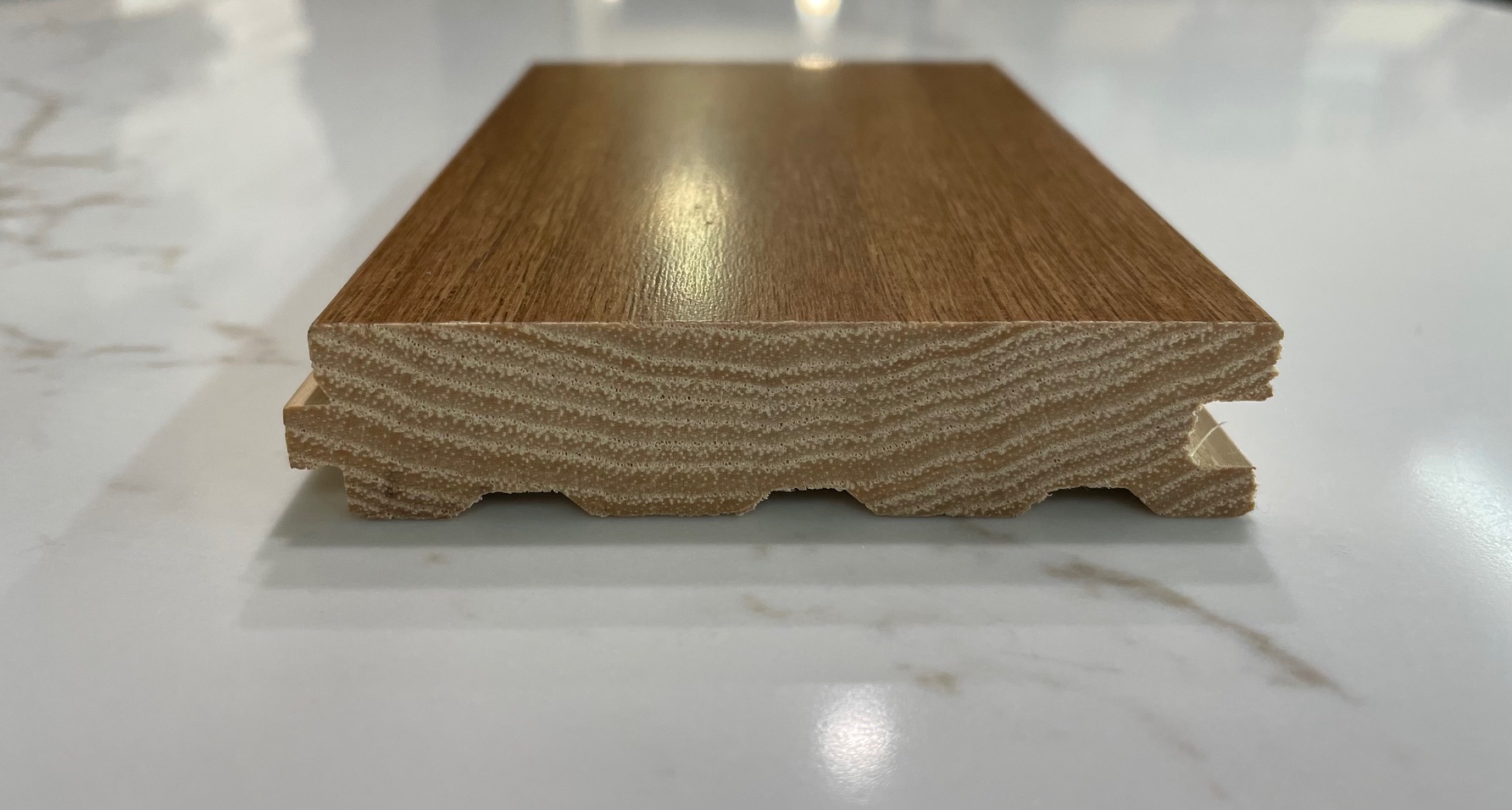
Solid hardwood flooring is made from a single piece of wood that is typically 3/4-inch thick. It’s crafted from various species of trees like oak, maple, cherry, or hickory, and each type of wood has its unique characteristics. The beauty of solid hardwood lies in its natural grain patterns and rich, timeless appearance. Plus, it can be refinished multiple times over the years to maintain its appearance.
Pros:
- Longevity: With proper care, solid hardwood floors can last for generations.
- Refinishing: You can sand and refinish solid hardwood if it gets scratched or worn, making it a long-term investment.
- Increases Home Value: Solid hardwood is a desirable feature for many homebuyers, potentially increasing your home's resale value.
Cons:
- Susceptible to Moisture: Without proper use of temperature and humidity control, solid planks have a tendency to warp or buckle in a high humidity environment, making it less suitable for basements or bathrooms.
- Expensive: Solid hardwood tends to be more expensive upfront.
- Vulnerability to Scratches and Dents: While durable, solid hardwood can still be scratched or dented by heavy furniture or pets. Certain species will be softer than others.
What is Engineered Wood Flooring?
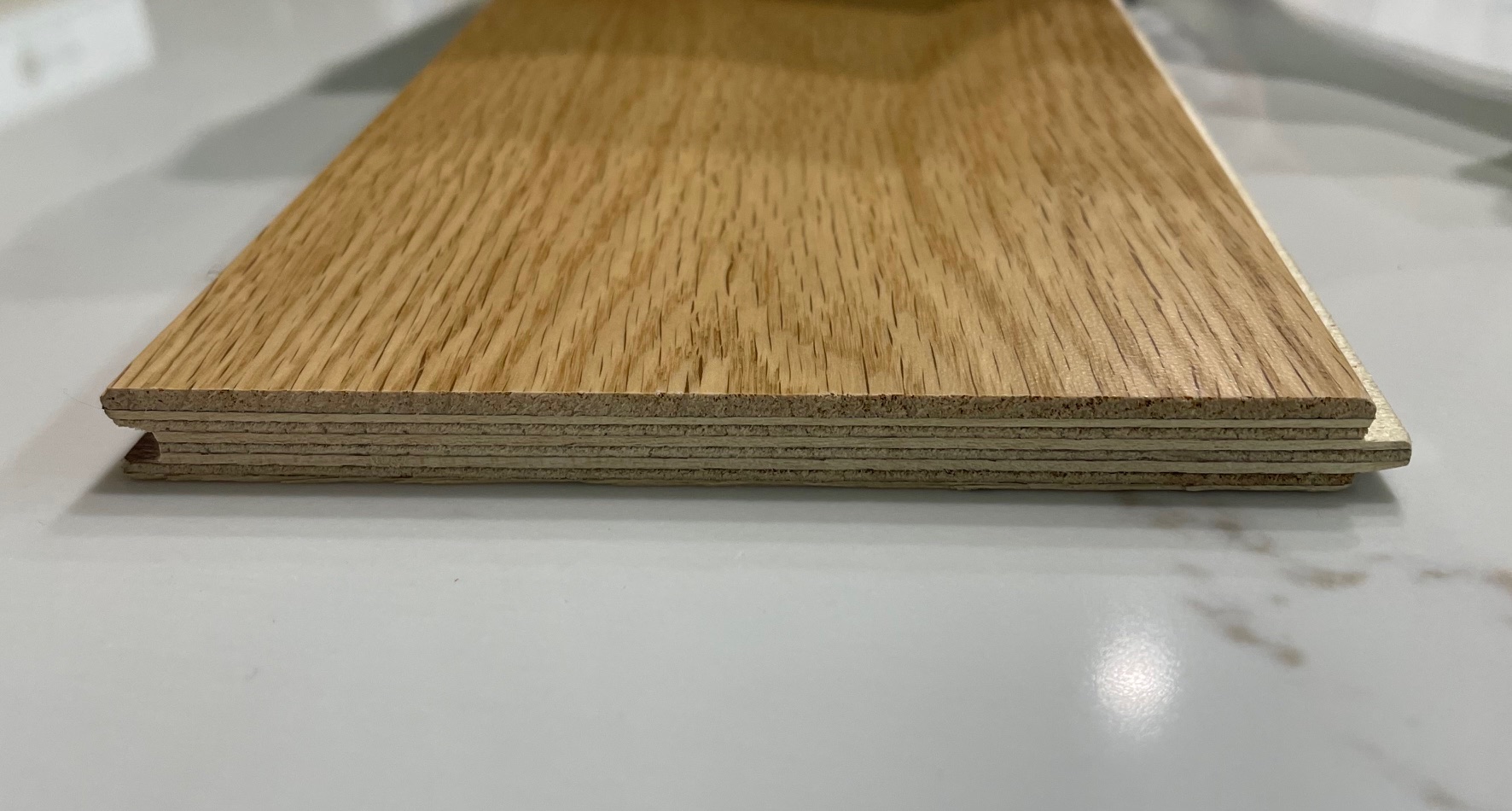
Engineered wood flooring is a more modern alternative to solid hardwood. It is constructed with multiple layers of wood veneers with the top layer being a slightly thicker veneer in the species of choice. The cross-layer construction of the veneers is designed to reduce expansion with dimensional stability.
Pros:
- Stability: The multiple layers in engineered wood provide better resistance to warping with exposure to humidity, making it a better choice for the Minnesota climate.
- More Affordable: Engineered wood flooring is typically less expensive than solid hardwood.
- Variety: Engineered wood has the ability to be manufactured in wider and longer planks than solid hardwood, which is often preferred in modern, contemporary, and other design styles.
Cons:
- Limited Refinishing: While engineered wood can be refinished, it can only be done a few times, as the top veneer layer is relatively thin.
Conclusion
Both solid hardwood and engineered wood flooring are fantastic choices for homeowners, each offering unique benefits. Whether you prioritize long-term durability and refinishing options or prefer the affordability and stability of engineered wood, understanding the pros and cons of each will help you make the best choice for your home.