

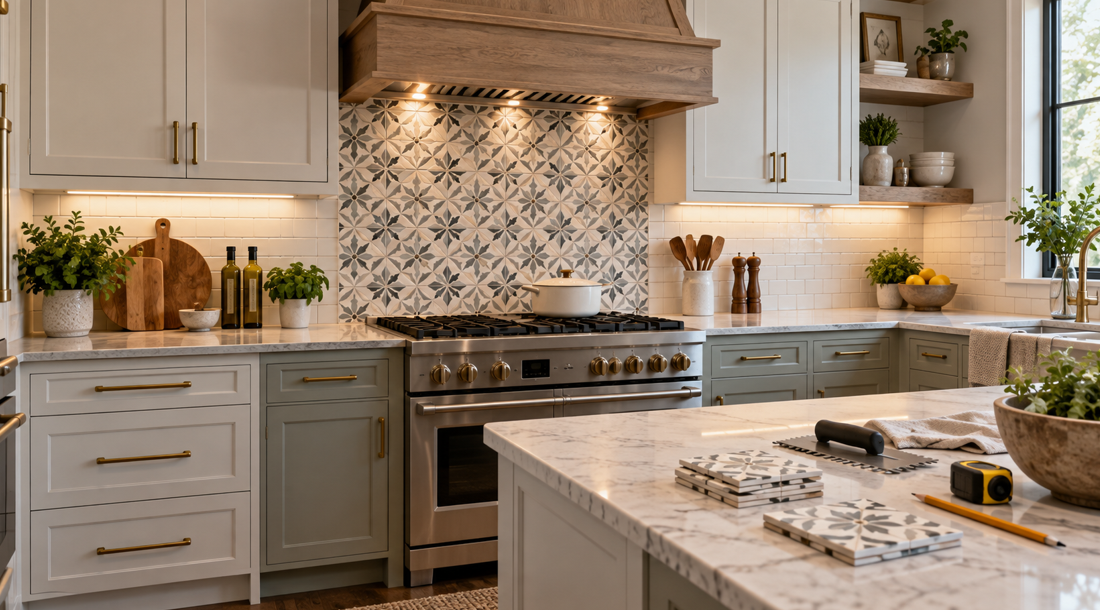
A kitchen backsplash may cover less surface area than the cabinets, countertops, or flooring, but it can have an outsized effect on how the entire room feels. It creates a visual connection between the lower and upper parts of the kitchen, protects the wall from everyday splashes, and gives homeowners an opportunity to introduce colour, texture, pattern, or contrast without redesigning the whole space.
For Apple Valley homeowners, the backsplash is often one of the final pieces that brings a kitchen remodel together. The right choice can make new countertops feel more intentional, help cabinetry stand out, and give an existing kitchen a refreshed appearance even when other major elements remain unchanged.
At Galaxie Floor Stores, we have more than 70 years of locally owned experience helping Minneapolis-area homeowners coordinate cabinets, countertops, flooring, and other interior finishes. We know that a backsplash should not be chosen in isolation. It needs to work with the colours, materials, lighting, layout, and everyday demands of the kitchen around it.
If you are planning a backsplash installation in Apple Valley, here is how to make the design feel connected, practical, and suited to your home.
Why the Backsplash Matters More Than It Seems
In many kitchens, the backsplash sits directly between two of the most visually important surfaces in the room: the cabinets and countertops.
That makes it a natural bridge between them.
If your cabinetry is simple and your countertop is understated, the backsplash can introduce personality. If the countertop already has strong movement or veining, the backsplash may work better as a quiet supporting element.
A good backsplash also adds practical protection.
Cooking, food preparation, washing dishes, and using small appliances can expose painted walls to moisture, grease, and splashes. A suitable backsplash creates a more durable and cleanable surface in these areas.
But the best result comes from balancing function and design.
A backsplash should not feel like an afterthought added after everything else has been selected. It should look as though it belongs with the rest of the kitchen.
Start With the Countertop
When planning a backsplash, the countertop is usually one of the best places to begin.
The two surfaces meet directly, which means differences in colour, pattern, and undertone are easy to notice.
If your countertop features dramatic veining or a highly visible pattern, a simpler backsplash can provide balance. A quiet tile in a soft neutral may allow the countertop to remain the main visual feature.
If the countertop is more uniform, you have more freedom to introduce texture, colour, or pattern on the wall.
Think about undertones as well.
A warm cream countertop may not pair naturally with an icy grey backsplash. A countertop with soft beige or gold movement may work better with warmer tile. Cool white or grey countertops can often support cleaner whites, blues, or other cool-toned finishes.
The goal is not to create an exact colour match. In fact, a backsplash that is too similar to the countertop can sometimes make the room feel flat.
What matters is that the materials look intentional together.
Consider the Cabinet Colour at the Same Time
Cabinets create the other major visual boundary around the backsplash.
Painted white or warm-neutral cabinets can work with a broad range of backsplash styles. Natural wood cabinetry may require more attention to undertones, because the grain and warmth of the wood already contribute visual texture.
Darker cabinets can create an opportunity for a lighter backsplash that reflects more light into the room.
Colourful cabinetry may benefit from something simpler.
For example, muted green or blue cabinets can already provide a strong design statement. Pairing them with an equally strong backsplash pattern can work in some kitchens, but it requires careful coordination.
A quieter tile may allow the cabinetry to remain the main feature.
Before ordering anything, view samples of the cabinet finish, countertop, and backsplash together.
That single step can prevent many design mistakes.
Choose the Right Amount of Contrast
Contrast gives kitchens depth, but there are different ways to create it.
You can use colour contrast, such as dark cabinets with a light backsplash.
You can create textural contrast by pairing smooth cabinets with a more tactile tile.
You can also use pattern contrast, where the countertop is quiet and the backsplash introduces shape or movement.
Not every kitchen needs strong contrast.
Some Apple Valley homeowners prefer a calm, layered look where the countertop, backsplash, and cabinetry stay within a similar colour family.
In that case, subtle differences in texture and tone can keep the room from feeling too uniform.
For a more dramatic kitchen, the backsplash may intentionally stand apart through deeper colour, unusual tile shapes, or stronger pattern.
The right amount of contrast depends on how much visual activity is already present elsewhere in the room.
Subway Tile Still Has Plenty of Flexibility
Subway tile remains popular for a reason.
Its simple rectangular shape can fit many kitchen styles, and small changes in size, colour, finish, and layout can produce very different results.
Traditional white subway tile can create a clean, familiar look.
Warmer off-white or cream versions may work better with natural wood cabinets or warmer countertops.
Glossy tile reflects light and can help brighten the wall, while matte finishes create a softer appearance.
The layout also changes the character.
A traditional brick pattern feels familiar and versatile. Stacked tile creates cleaner vertical or horizontal lines. Vertical installation can add a more contemporary feel and draw the eye upward.
The advantage of a simple tile is that it tends to support the rest of the kitchen rather than compete with it.
For homeowners who want a backsplash with long-term flexibility, that can be valuable.
Large-Format Tile Can Create a Cleaner Look
Larger-format backsplash materials can reduce the number of grout joints on the wall.
That creates a cleaner, more continuous appearance and can make maintenance simpler in busy cooking areas.
Large tiles can work especially well in contemporary kitchens where homeowners want fewer visual interruptions.
They may also help a smaller kitchen feel less fragmented.
The key is proportion.
Very large material can look striking when it is carefully positioned, but cuts around outlets, corners, cabinets, and windows need to be planned properly.
Installation quality becomes particularly noticeable when fewer, larger pieces are used.
Patterned Tile Can Become the Focal Point
A backsplash is one of the easier places to introduce pattern because it occupies a controlled section of the room.
Geometric shapes, decorative motifs, subtle variations, or patterned stone looks can all add character.
But pattern should have a clear role.
If your countertops already feature dramatic veining, adding a highly patterned backsplash immediately beside them can make the kitchen feel visually crowded.
On the other hand, a relatively simple countertop can provide an excellent foundation for a stronger backsplash.
This is why the two materials should be selected together whenever possible.
If you love a patterned tile but are unsure about using it across the entire kitchen, consider placing it in a more focused area.
The space behind a range can become a feature zone while quieter tile is used elsewhere.
That approach adds interest without overwhelming the room.
Should the Backsplash Reach the Upper Cabinets?
In a traditional kitchen layout, the backsplash typically runs from the countertop up to the bottom of the upper cabinets.
That remains a practical and visually balanced choice.
However, kitchens with open shelving, fewer upper cabinets, or range hoods may offer more flexibility.
In those areas, homeowners may choose to extend the backsplash higher up the wall or even to the ceiling.
A full-height backsplash can create a strong architectural effect, especially around a range hood or open shelf.
It can also make the backsplash material a much more prominent part of the room.
Before deciding, consider how much visual attention you want the material to receive.
A subtle tile can often be extended higher without becoming overwhelming.
A bold colour or pattern may feel much stronger when used across a larger area.
Think Carefully About the Area Behind the Range
The wall behind the range is frequently the most visible backsplash area.
It is also exposed to cooking splashes and regular cleaning.
That makes both material selection and installation important.
Some homeowners use the same backsplash material throughout the kitchen for continuity.
Others create a feature behind the range with a different layout, pattern, or material.
Either option can work.
If you introduce a feature section, make sure it feels connected to the rest of the kitchen. Repeating a colour, material, or shape elsewhere can help the design feel deliberate.
Also consider the range hood.
The backsplash and hood are often seen together, so their proportions and finishes should complement one another.
Grout Colour Changes the Final Appearance
Grout may seem like a small decision, but it can significantly alter how tile looks.
Grout that closely matches the tile creates a quieter, more continuous appearance.
Contrasting grout makes the tile shape and pattern more visible.
White tile with dark grout, for example, highlights every individual piece.
That can create a graphic look, but it also means alignment and installation details become more noticeable.
A softer grout colour can reduce that effect.
Maintenance should be considered as well.
Ask about grout products, sealing requirements, and cleaning recommendations rather than selecting purely on colour.
The best grout choice supports both the design and the practical requirements of the kitchen.
Do Not Forget Electrical Outlets
Outlets and switches interrupt the backsplash surface, so their locations influence the final appearance.
In many kitchens, they are unavoidable.
Good planning can help reduce their visual impact.
Outlet covers that coordinate with the backsplash or surrounding finishes may blend more naturally. In some remodels, outlet positioning may also be reviewed as part of the overall electrical plan.
However, changes involving electrical work need to follow appropriate requirements and should be handled by qualified professionals where necessary.
The main point is to think about outlets before installation begins.
A backsplash design may look completely different once several switches and receptacles are placed across it.
Lighting Can Change the Backsplash Colour
Tile and stone do not look the same under every type of light.
Natural daylight, overhead fixtures, and under-cabinet lighting can all change how colours and textures appear.
Glossy backsplash materials may reflect light strongly.
Matte surfaces absorb more of it.
Textured tile can create visible shadows under under-cabinet lights, making the surface appear more dimensional at night than it does during the day.
This is another reason physical samples are useful.
View them in the kitchen if possible.
Look at the materials in morning light, afternoon light, and after dark with the kitchen lights turned on.
A colour that appears perfect in a brightly lit showroom may look warmer or cooler in your own home.
Backsplash Ideas for White Kitchens
White kitchens offer tremendous flexibility.
If both the cabinets and countertops are light, the backsplash can remain quiet for a clean, layered appearance or become the feature that adds more character.
Warm white tile can prevent the room from becoming too stark.
Soft beige, light taupe, pale grey, muted green, or blue can introduce colour while keeping the overall design calm.
Texture is another option.
A handmade-look tile with subtle surface variation can add depth without introducing a strong pattern.
For homeowners who want a more dramatic result, darker tile can create a clear contrast with white cabinets.
The choice depends on whether you want the kitchen to feel bright and seamless or more defined.
Backsplash Ideas for Wood Cabinets
Natural wood already provides colour, grain, and movement.
That means the backsplash often works best when it supports those features instead of competing with them.
Simple warm neutrals can be especially effective.
Cream, soft white, beige, muted stone tones, and understated greens can pair naturally with many wood finishes.
The exact choice should depend on whether the cabinetry leans warm, cool, light, medium, or dark.
Be careful with wood-look floors as well.
If you already have wood cabinetry and a wood-inspired floor, adding another highly textured backsplash can introduce too many competing surfaces.
A simpler wall finish can give the eye somewhere to rest.
Backsplash Ideas for Small Apple Valley Kitchens
In a smaller kitchen, the backsplash can influence how open or busy the room feels.
Light-reflective tile may help brighten spaces with limited daylight.
A relatively simple pattern can create continuity rather than dividing the wall into many small visual sections.
That does not mean small kitchens cannot use colour.
A rich backsplash can add depth and personality when balanced with lighter cabinetry and countertops.
What matters is the overall composition.
If every surface has a strong pattern, the room may feel crowded.
If one surface leads and the others support it, even a compact kitchen can feel intentional and well designed.
Plan Installation After the Countertops
In most kitchen remodels, final backsplash installation should occur after the countertops are in place.
That allows the backsplash to meet the actual finished countertop surface rather than an estimated position.
It also helps installers account for small variations in walls and countertop placement.
If you are completing a full remodel, the sequence of work matters.
Cabinet installation, countertop measurement and installation, electrical details, and backsplash work may all depend on one another.
Planning this sequence early can reduce delays and prevent finished materials from being damaged by work that should have occurred beforehand.
Proper Surface Preparation Matters
A backsplash needs a suitable wall surface.
If existing tile has been removed, the wall may require repairs before new material is installed.
Uneven areas, damaged drywall, adhesive residue, or other imperfections can affect the final finish.
Installing new tile over a poorly prepared surface may create alignment issues or make the finished wall look uneven.
Surface preparation is not the most exciting part of a backsplash project, but it contributes directly to the quality of the result.
Professional installers can assess the wall conditions and determine what preparation is appropriate for the chosen material.
Professional Installation Helps With the Details
Backsplash installation involves more than placing tile in straight rows.
Corners, outlets, windows, cabinets, range hoods, trim pieces, patterns, grout joints, and changes in wall height all require accurate planning.
A simple-looking installation can still involve many individual cuts.
If the design includes a detailed pattern, alignment becomes even more important.
Galaxie Floor Stores works with certified, bonded, and insured installers, giving homeowners professional accountability throughout their projects.
For quality-conscious homeowners in Apple Valley and the wider Minneapolis metro, workmanship can make the difference between a backsplash that simply covers the wall and one that looks properly integrated into the kitchen.
Should You Follow a Trend?
Backsplash trends can be useful for inspiration, but they should not be the only reason to choose a material.
A kitchen backsplash is more permanent than paint but easier to change than cabinetry or countertops.
That gives homeowners some freedom to express personality.
If you love a strong colour or unusual pattern, the backsplash can be a reasonable place to use it.
But ask yourself whether you genuinely like the material or simply like seeing it in photographs.
A good design should feel appropriate to your home even after the newest trend changes.
That usually means balancing current style with your own preferences and the more permanent elements already in the room.
Bring Samples Together Before You Decide
One of the most useful things you can do before choosing a backsplash is compare all the major finishes together.
Bring the cabinet sample, countertop sample, flooring information, paint colour, and backsplash options into the same view.
Then remove anything that clearly fights with the rest of the palette.
This process often makes the final choice easier.
A tile that looks exciting by itself may feel too busy beside a patterned countertop.
Another tile that seemed plain in isolation may become the perfect complement once everything is together.
For Apple Valley homeowners, Galaxie's Apple Valley showroom provides an opportunity to look at kitchen materials in person and get design guidance rather than relying entirely on online photographs.
Let the Backsplash Complete the Kitchen
A successful backsplash does not have to be the first thing someone notices.
Sometimes its role is to create a polished background that makes the cabinets and countertops look even better.
In other kitchens, it becomes the feature that gives the room personality.
Either approach can work.
Start with the materials you already have or have selected. Decide how much contrast, colour, texture, and pattern the room needs. Think about maintenance, lighting, grout, outlets, and installation details as well as appearance.
Most importantly, treat the backsplash as part of the complete kitchen rather than a last-minute decoration.
When cabinets, countertops, flooring, and backsplash materials are considered together, the room is more likely to feel intentional and balanced.
With more than 70 years of locally owned experience, Galaxie Floor Stores has helped generations of homeowners throughout Apple Valley, Bloomington, and the Minneapolis area coordinate materials and professional installation for kitchens and other home-improvement projects.
If you are planning a kitchen update in Apple Valley and want help coordinating your backsplash with new or existing surfaces, request a free estimate to discuss materials, measurements, design ideas, and installation with the Galaxie team.